- The Lazy Reader
- Posts
- 'To save her son, she had to give him up.'
'To save her son, she had to give him up.'
PLUS: Money guides, Chines hackers, and a stolen piece of American pop culture history.
Hi 👋
Welcome back to The Lazy Reader, where we read some of the best longform journalism from across the Web ✨
Not much to say this week, honestly. Plus I’m cramming this last minute (been extremely hectic at work!) so we’re hopping straight into it:
But first, some choice picks from last week’s newsletter:
Maclean’s The Incel Terrorist
GQ Meltdown
Marie Claire The Big Business of Breast Cancer
As always, please let me know what you think of the list this week by voting in the poll below.
Happy reading and see you again next Monday!
PS - Thanks so much to Masterworks (new sponsor!) and 1440 Media (consistent as always!) for supporting this week’s newsletter. Please, please consider clicking their respective ad links below. It’s free, really easy, and helps me out a lot.

This might be a relatively niche area of interest, but I found it to be a very fun, surprisingly deep story that goes far beyond the crime at its surface.
Because yes, the backbone of this story is the theft of the iconic ruby slippers from the original Wizard of Oz show, but the writer expertly takes the opportunity to weave in a very intricate review of American culture. The piece takes us through the life of Judy Garland (who played Dorothy and wore the iconic shoes) and through a particularly momentous moment in pop culture history.
This structure—weaving in this history lesson with the crime narrative—makes it seem like the point of the story is that in stealing the slippers, the thieves also threatened to steal a crucial part of American pop culture. And that might really be the writer’s intention. But I don’t buy it. It never felt like such a connection was convincingly made, at least not enough to substantiate this argument.
Instead, I think the true value of this story is in how well everything was told. It never felt like the trip down history was superfluous. It never felt like the writer was padding the word count. Everything flowed really well, and I never found myself lost in whatever narrative thread the piece was pulling on. It’s a masterful display of writing.
(This one is timely, too, given how the Wicked movies are big right now.)
The Wealth Whisperers Who Save Super-Rich Families From Themselves | The Economist, $
Long-time readers know that I basically can’t relate to wealthy people. So stories like these typically don’t resonate much with me—though that does mean that they do offer me a nice, light-hearted form of entertainment. In that regard, this article was very fun for me to read. Not to make light of the problems of the people here (which I’m sure are very real and very urgent to them), but I found it endlessly fascinating how there’s an entire industry of consultants helping the extremely wealthy figure out how to keep their money in their family. Gross, to a certain extent, but definitely fascinating.
A Bully Finds a Pulpit on the Web | The New York Times, $
An oldie-but-goodie from the NYT, looking at how the Internet has changed commerce, and how people will always find a way to game the system. Of course, the abuse and threats that this bully carried out to further his own business is awful, but to my mind, that also shows how far people are willing to go for a quick buck.
How to Live in a Catastrophe | Intelligencer, $
I want to be fair to this story. It’s good, really. It takes a very critical (deservedly) look at the global powers that brought us to this point of catastrophe. And for most of the piece, the writer offers some sharp insights on how we might move forward from here. I just feel like the analysis gets a bit flaccid at the end. The setup was great—taking the lead of the communities at the forefront of the catastrophes, rather than the arm-chair, ivory-tower experts—but the overall conclusion just… dissolved into nothing. There was a clear next step to be taken, but the writer just didn’t.
But what can you actually DO about the proclaimed ‘AI bubble’? Billionaires know an alternative…

Sure, if you held your stocks since the dotcom bubble, you would’ve been up—eventually. But three years after the dot-com bust the S&P 500 was still far down from its peak. So, how else can you invest when almost every market is tied to stocks?
Lo and behold, billionaires have an alternative way to diversify: allocate to a physical asset class that outpaced the S&P by 15% from 1995 to 2025, with almost no correlation to equities. It’s part of a massive global market, long leveraged by the ultra-wealthy (Bezos, Gates, Rockefellers etc).
Contemporary and post-war art.
Masterworks lets you invest in multimillion-dollar artworks featuring legends like Banksy, Basquiat, and Picasso—without needing millions. Over 70,000 members have together invested more than $1.2 billion across over 500 artworks. So far, 25 sales have delivered net annualized returns like 14.6%, 17.6%, and 17.8%.*
Want access?
Investing involves risk. Past performance not indicative of future returns. Reg A disclosures at masterworks.com/cd

Oh this one was painful.
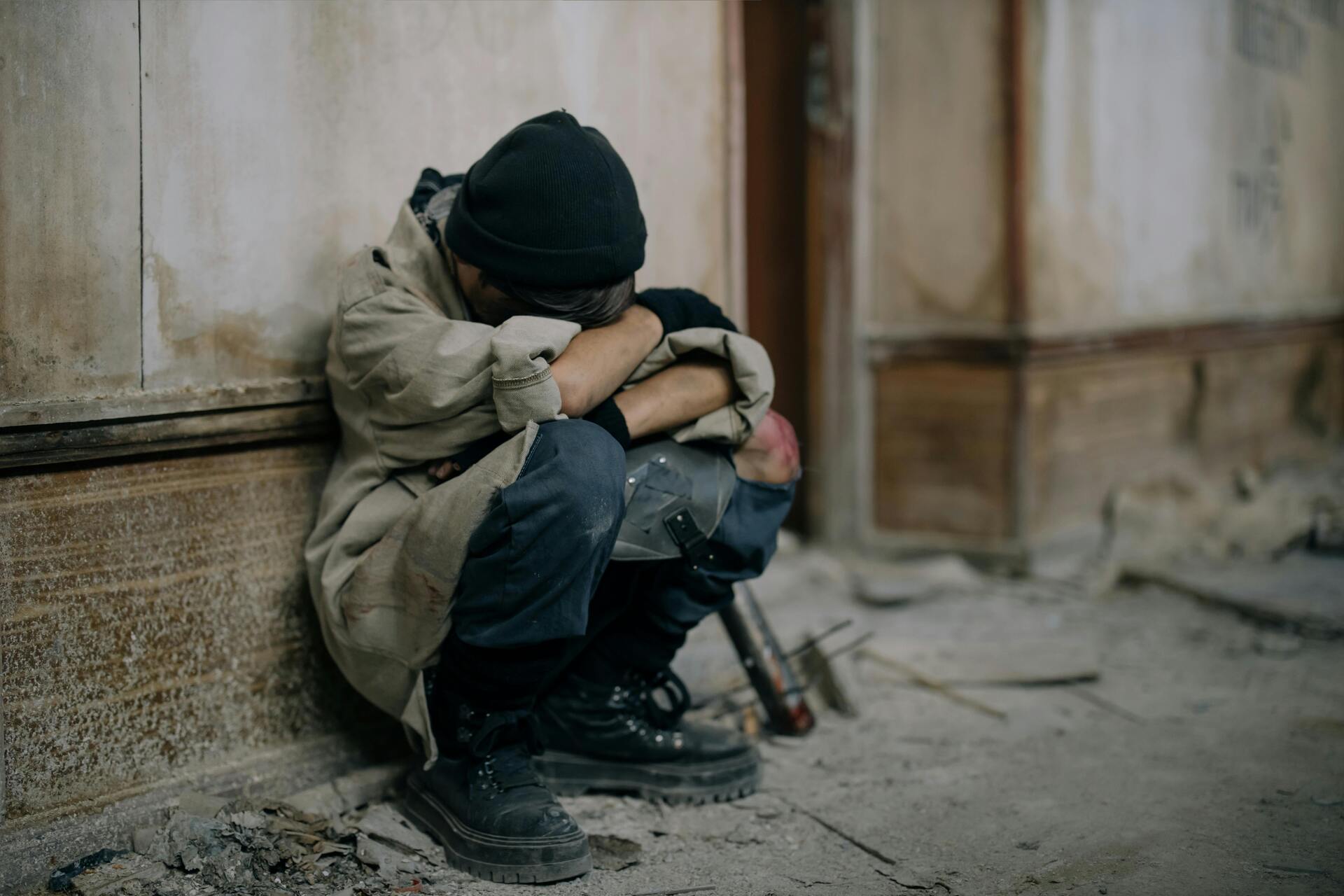
Some states in the U.S. allow parents to just up and leave their children behind, but only up to a certain age. Nebraska super-charged this and removed all safety rails, which has resulted in some very complicated, very difficult situations. This story follows one such episode and really digs into the intricacies of family life, looking at how parents (a desperate mother, in this case) is pushed to the point of desperation, left with no other choice but the most horrifying one.
Briefly, the piece also dips into the legislative side of things, and even offers fleeting hope that things might finally change for the better, however that might look like. But as with stories like these, that rarely plays out.
I will admit: Even after reading through this story, I don’t know how I feel about the state legitimizing and codifying certain protections for patients who can just choose to abandon their kids. I come from a very family-centric country, and so this just flies in the face of everything I was raised to value.
But I understand, of course, that that’s not true for everyone, and that this is an endlessly complex subject.
‘I Knew In My Head We Were Dying’: The Last Voyage of the Scandies Rose | The Guardian, Free
Been sitting on this story for months, always putting it off for other pieces that I felt were more interesting.
Now that I’ve finished it (finally), I can say that I was being unfair, but only somewhat. This piece, at its core, is a maritime accident story. And as a baseline, those tend to be riveting: action-packed, and there’s always something that goes horribly wrong, something to latch your emotions onto. That’s the same here, definitely, which is why the article still made it onto the newsletter. But for some reason (and I truly can’t seem to pinpoint what), this one felt a bit blander than the usual seafaring tragedy stories. Maybe it’s bias, maybe I’m missing something.
A fascinating, gripping retrospective on one of the biggest cybersecurity breaches of our time, but one that has since been largely forgotten, eclipsed by bigger, more recent hacks.
The story is an effective cautionary tale about how safe we are online. If a company like RSA, which itself is built upon the principle of cybersecurity, can be infiltrated and taken down in the most spectacular fashion—what of us? But there are no answers offered. Not that there are any satisfactory answers at all, I think. At least there’s some solace to take in how compelling the narrative is.
Fiction: If a Digitized Tree Falls | Reactor, Free
This piece is… interesting. It swerves a couple of times in ways that disoriented me. At one point, I was wondering if I was reading the same story. This approach is very experimental, to say the least. I did some digging around after reading and found that reviews were mixed. I still don’t know where I stand: I can appreciate the liberties that the author took, but I also concede that it did take me out of the experience
This story, which is an actually published novella, was written by Ken Liu, who also penned the Dandelion Dynasty series—which I’m planning to go through this year. Can’t wait!
How did you like this week's list? |
Seeking impartial news? Meet 1440.
Every day, 3.5 million readers turn to 1440 for their factual news. We sift through 100+ sources to bring you a complete summary of politics, global events, business, and culture, all in a brief 5-minute email. Enjoy an impartial news experience.
Thanks for reading! Please, please reach out if you have feedback, suggestions, or questions. Alternatively, you can fill out this super quick survey form. I promise it won’t even take five minutes of your time, and it’ll be a HUGE help!
ALSO: I know some of the stories I recommend might be behind paywalls, and maybe I can help you with access to those. Send me a message and let’s see what we can do 😊
Until next Monday! 👋
Reply