- The Lazy Reader
- Posts
- 'A mystery that will never be solved.'
'A mystery that will never be solved.'
PLUS: A tree at the cusp of world war three

Hi 👋
Welcome back to The Lazy Reader, where we read some of the best longform stories from across the Web ✨
Something a bit different this week. Since February, I’ve been (slowly) digging through a massive True Crime series from TexasMonthly. I’ve finally finished it and am excited to share it with all of you. It’s quite the journey.
In other news: TLR has been stuck growth-wise for a few months now. I’ve been asking around other newsletter operators and it seems it’s reasonably common to hit a slump every now and then, but I feel like mine shouldn’t have come this early. I can’t complain much, too, since I honestly haven’t been putting in a lot of time into this newsletter lately—work has been so busy and life outside has been extra hectic.
I guess I should be thankful that I don’t rely on TLR as my primary livelihood. I’d be extremely stressed otherwise.
Still, if you, dear reader, enjoy my recommendations and know someone who’d like them as well, please do help spread the word! I’d be really, really grateful.
As always, please let me know what you think of the list this week by voting in the poll below.
Happy reading and see you again next Monday!
Story in Spotlight
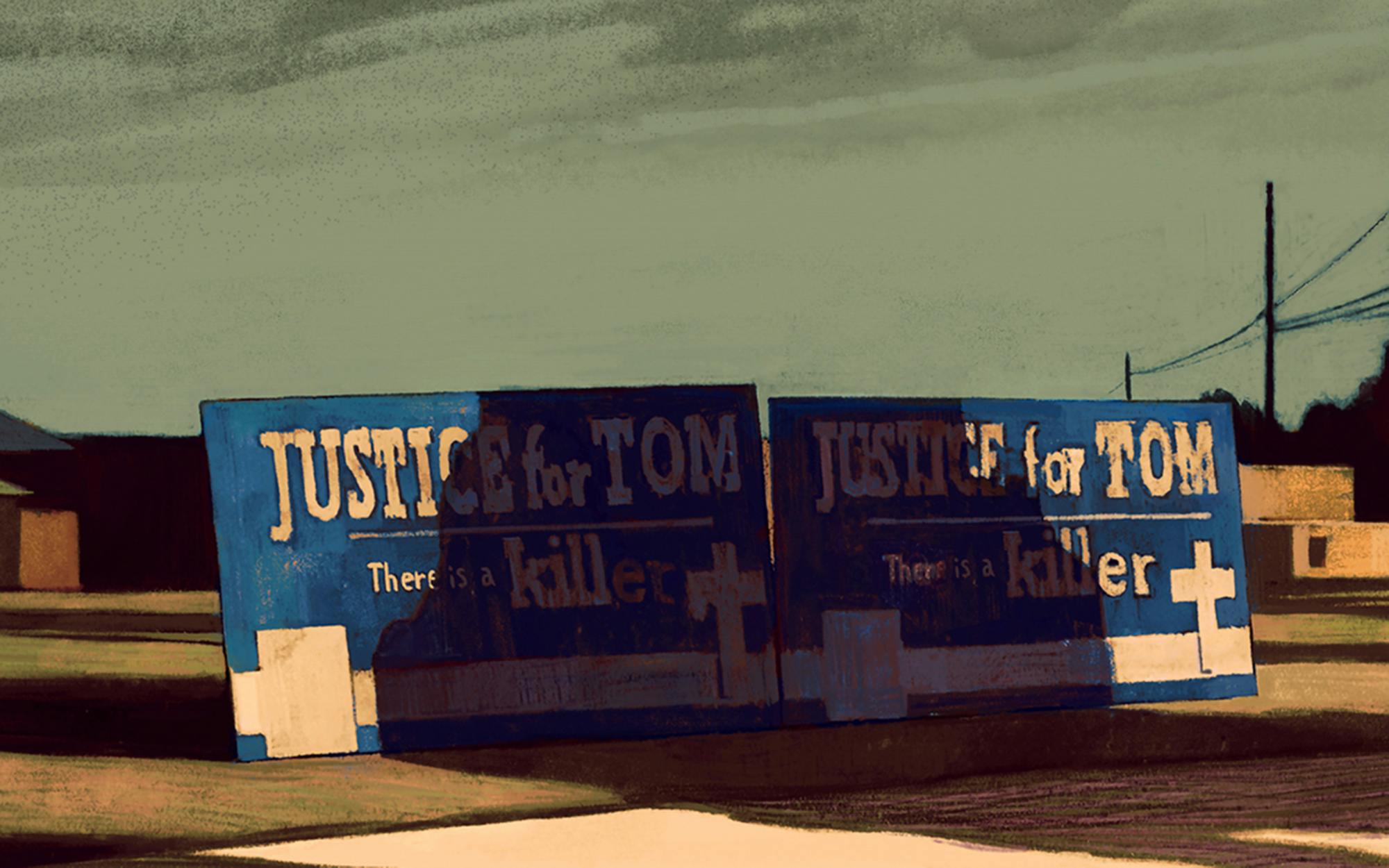
I’ve been chipping away at this series since February and I’m happy that I can now share it with you. This one, from the father of modern True Crime, Skip Hollandsworth, follows the mysterious disappearance of a boy in this back-water Texas town.
And while that seems like a simple enough premise, the series goes far deeper. The beauty of True Crime, after all, is that it reveals so much about human nature and how we regard each other. In this case, Tom Brown’s disappearance brings to the surface buried tensions between the citizens of Canadian. Old grudges that had been swept aside. doubts and whispers and rumors. Jealousy and insecurities.
There is, of course, the matter of the mystery. And suffice it to say that it never gets solved. (There’s a Part 9 to this series, which is an interview with Skip, and which I didn’t listen to.) But that doesn’t mean that there hadn’t been any progress with the investigation. In fact, the investigation also plays a major part in the series and becomes a heavy source of intrigue.
All told, this story is a crime piece, sure, but it’s also a tough look at Canadian, Texas and the community it’s fostered.
Part 1 A Pretty Little Place
Part 2 Tom’s Loop
Part 4 Lake Marvin Road
Part 5 Unusual Suspects
Part 6 The Thicket
Part 7 The Wake
Part 8 The Remains
The Longform List
Majoring in Crime | Vanity Fair, $
Here’s another True Crime piece, but this one isn’t nearly as heavy as the series above. In fact, I’d say that this one is pretty light-hearted in general, if not outright humorous at times. There is a high-value heist at the heart of this story, and hundreds of millions of dollars on the line. But the crime itself is by no means sophisticated, and the thieves are in no way masterful. Still, the fact that they almost got away with it says a lot about law enforcement.
How Astrology Became the New Therapy | MacLean’s, Free
I have very complicated feelings about this essay. So I guess let’s get the easiest ones out of the way. On some level, I agree with what the writer is trying to say: That in order to resonate with the broadest possible audience, astrology has become so commodified and sanitized and overly distilled. Sure, there is value in how it seems to provide some form of guidance or reassurance to its users (who happen to be mostly women, and also mostly white), but it no longer means anything.
What the writer fails to do, I think, is to ground the practice of astrology in its historical and cultural origins. The most she does is trace it back to when it was first deployed in “Western” mainstream, which really just erases its rich background of Babylonian then Hellenistic then Buddhist customs. The practice has endured for centuries for a reason, and despite the author trying to dismiss it as pseudoscience, astrology has been around far longer than modern science has.
I wish there was an interrogation of that, and then maybe it would have made more sense why we’re seeing astrology evolve in the way it has today.
Between the Sheets at the College Excel Championships | The Washington Post, $
This one isn’t as deep as the astrology piece above, I swear. (Or maybe I just didn’t read into it that much.) It’s just a fun trip to the U.S.’s national Excel championship, where the country’s most decorated nerds duke it out to use Microsoft’s most confusing application to solve some of the most complicated questions.
I consider myself to be a nerd, too, and I definitely am not new to Excel. But the things that these kids can do with the program are incredible.
Sex, Drugs, and Murder in Tech Land | Esquire, $
This story has been on my mind a lot since I read it a few weeks back. For a while, it never really stood out to me. Not to diminish the pain that Lee’s death has caused, but to a reader like me, I didn’t think this story had anything to sufficiently set it apart from other drug and murder stories.
But when these things happen at the highest circles of tech—one of the world’s most powerful industries—things reach a different level. There are questions here about criminality in San Francisco, but I think the smartest ones to ask have to do with how normalized and glorified drugs have become in these influential circles.
Summa Cum Laude | The Fence, Free
Another interesting piece. And huge plus points for being from a relatively smaller outlet! I always love discovering those.
This story is about gay porn. The writer goes to profile one of the U.K.’s most prolific adult content creator, who not only produces porn but has also started his own class, helping other men get into the business of boning. The catch here is that this creator is gay for pay. He insists he is straight, but makes his living by sleeping with other men. His buddies, as he insists they are.
That opens up a very difficult and fraught set of questions, not just about sex work and how inherently exploitative it is, but also about homosexuality and agency and the economics of pretending to be someone you’re not.
How did you like this week's list? |

Last week, I shared a story on here about the media being co-opted by the military to spread propaganda. And as much as it pains me to say—this is The Atavist, after all, and I really respect them—this feels like one of those cases.
Now before you go and accuse me of whatever: I’m sure there are kernels of truth here. The North Korean army may very well have instigated the violence. God knows they’re a brutal bunch, and at the time they were itching to flex their firepower and piss the U.S. off. But I don’t believe for a second that the U.S. soldiers were as innocent or magnanimous as this story paints them. That they’re the unequivocal victims here.
And some sections were a bit too glowing in how they painted the military, which is suspect, given what we now know about how the army operated back then. It feels like this piece smoothed that over a bit too much.
Plus maybe I’m being a bit too much of a sissy here, but in much of the latter half, when the U.S. armed forces was making this massive show of force—I found that so distasteful and macho in a disgusting way. A waste of resources. A needless flex that, in my measurement, just showed how insecure the U.S. is in its power. But maybe that’s just me, and maybe that’s why I’m never going to be a military officer.
Thanks for reading! Please, please reach out if you have feedback, suggestions, or questions. Alternatively, you can fill out this super quick survey form. I promise it won’t even take five minutes of your time, and it’ll be a HUGE help!
ALSO: I know some of the stories I recommend might be behind paywalls, and maybe I can help you with access to those. Send me a message and let’s see what we can do 😊
Until next Monday! 👋
Reply